
I told my laptop, "Take me somewhere tranquil. I want to relax."
It didn't ask any follow-up questions. About a second later a voice said "Mm. Watch…" and a lake started building itself around me: a dock, still water at golden hour, low fog, pine trees, fireflies. 122 objects in about eight seconds. I never asked for a dock or for fireflies. The model chose them because it understood what relax meant.
Then I said "make it night, and fill the sky with floating lanterns," and fifty lanterns rose in under two seconds. In my test notes I labeled that moment the holy-shit beat. It's the reason I'm writing this.

Three waves that happened separately
I've spent my career near three different waves in tech. Each one had a piece of this.
1. Personalization. Recommendation engines predict what you want before you ask. I worked on this at Meta for years, and it's very good at one thing: picking from a catalog. The feed can only show you what somebody already made. It ranks the catalog. It can't add anything to it.
2. Immersion. VR makes you feel like you're actually somewhere. The Oculus headsets got really close, and AR glasses will take it further. But somebody has to build every one of those worlds by hand, and that's slow and expensive. Here's my one-line read on the metaverse: Meta had the 3D and didn't have a way for regular people to make things in it.
3. Generative AI, which does two things the other two waves couldn't. It understands intent, in the moment ("relax" means a dock, not a nightclub) and over time, as it learns you. And it can make things. That second part removes the catalog entirely. Nothing has to exist before you ask for it.
Put the three together and you get a world that knows what you'd want, builds it on the spot, and puts you inside it.
What I've been building
Voice World is my first attempt at the immersive half. It's a first-person 3D world in the browser that you change by talking to it. Nothing in it is pre-built. Every place in the screenshots came from one or two spoken sentences.
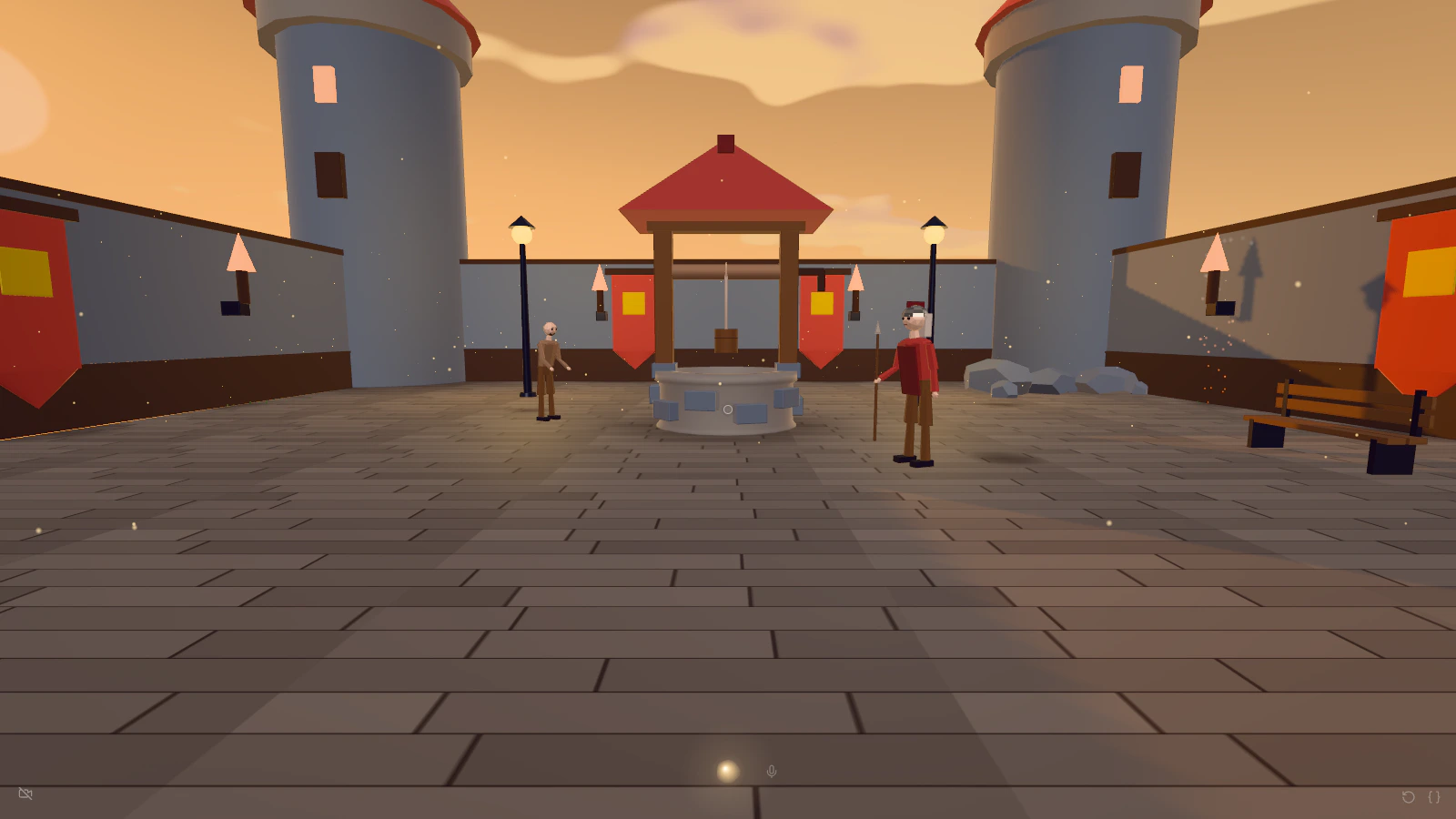
- "Make me a giant." "Shrink me to the size of an ant." (The apple turns into a boulder.)
- "A whale swimming through the sky."
- "Put a baker right in front of me," then "Hello, who are you?" The baker has a personality, a voice, and a memory that survives a page reload.
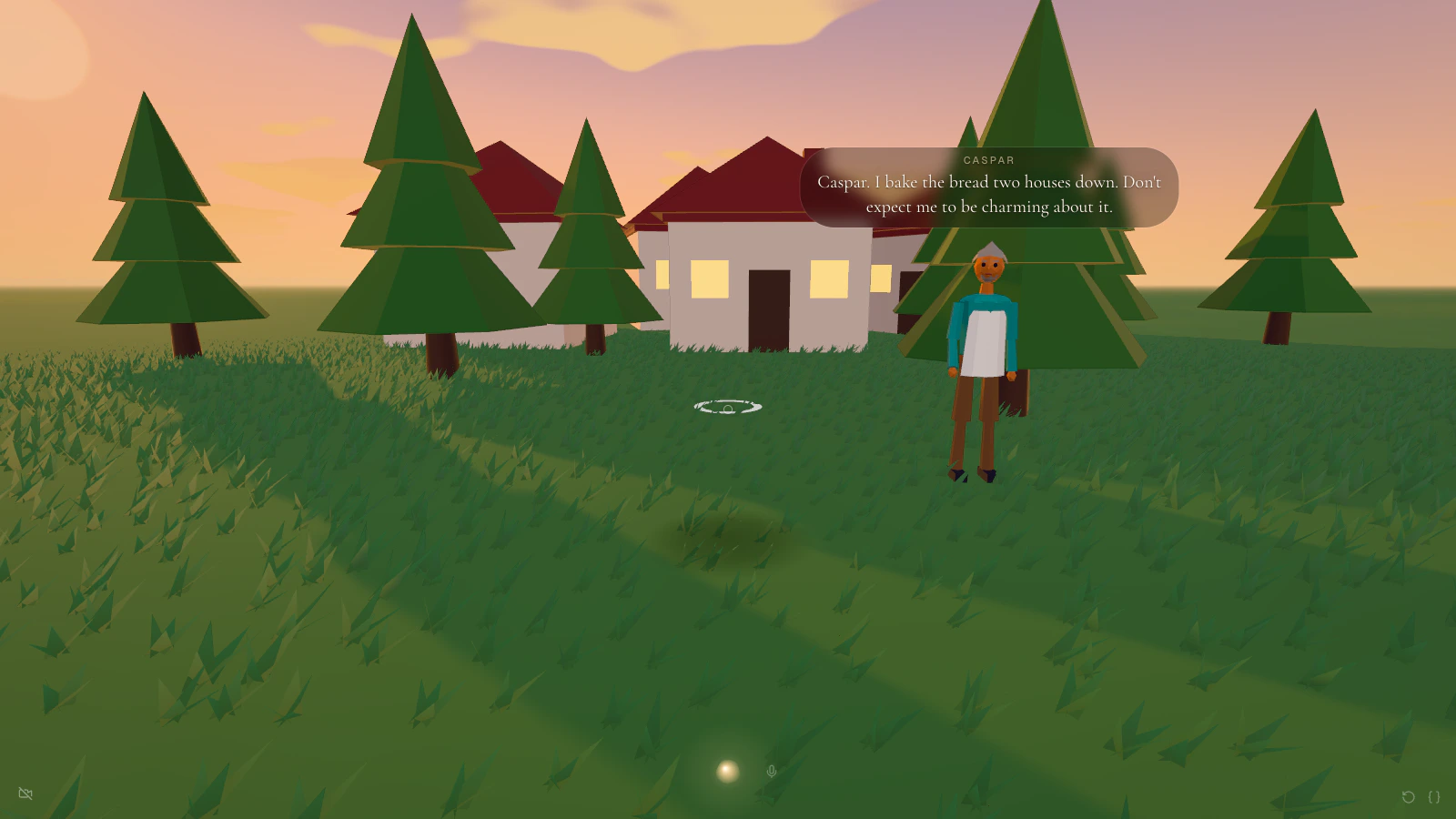
The way it works is simple. A fast voice model plays the genie and talks back right away. A smarter model works out what you meant and lays out the scene, and the scene assembles around you while that model is still writing. The models never do coordinate math and never draw anything. They say what should exist, and a plain engine puts it in place. A new place costs a few cents.
Here's a small version you can try. Make a wish and a model turns it into a short list of ops, then a plain engine places them on a little island. Quick wishes use a fast model and the built-in pieces. Grand wishes take about ten seconds longer, and the model designs its own objects first.
The four wishes above replay real runs of the selected mode, recorded once. Typing your own calls the model live.
The north star I wrote down before building it: the player should feel like they're god, or they have a genie. I graded every test against that line: did the world feel like it answered to you?
Instant Interiors is the practical version. Paste in a floor plan from a real listing and about eight seconds later you're walking through it in 3D. Then you just say what you want: "swap the sofa for a green velvet sectional," "it's night, lamps on." Same idea pointed at something you might actually buy.
Camera Shy is the same instinct without the 3D. Instead of a dead lens you talk to a face that asks you good questions. It comes from the same place: technology that meets you where you are, so you don't have to do the setup yourself.
The missing piece is you
Voice World doesn't know anything about you. When you say "somewhere I'd love," it can only guess, because it doesn't have your data.
But you've probably already given that data to an AI. If you've used Claude or ChatGPT for a year, it has a decent picture of you: what you read, where you've traveled, what you worry about, what you'd do with a free Saturday. So the next version gets a simple onboarding step: "Paste this prompt into your assistant, then paste back what it says." One paragraph of who you are. After that, "take me somewhere I'd love" has something real to work from.
That's the whole thesis. Recommendation engines learn what you want. Generative AI builds it from nothing. VR puts you inside it. Lay those three on top of each other and I think you get something close to a personal heaven: a place that knows what you'd want and gives it to you, all of it, immediately.
I know that's a big claim. I've half-jokingly been calling it "heaven serving."
The part to get right
I also spent years on integrity work, so I know how this can go wrong. Feeds learned to serve whatever we'd click at 1 a.m. A heaven built on that objective is a casino with good lighting.
The version worth building learns the things you'd sign off on with a clear head. Who you are on a good day. That's a design choice, and the people building these worlds have to make it on purpose.
The pieces work today, they're cheap, and they run in a browser tab. The headset will catch up. If you want to feel what I mean, open Voice World in desktop Chrome and ask it to take you somewhere tranquil.